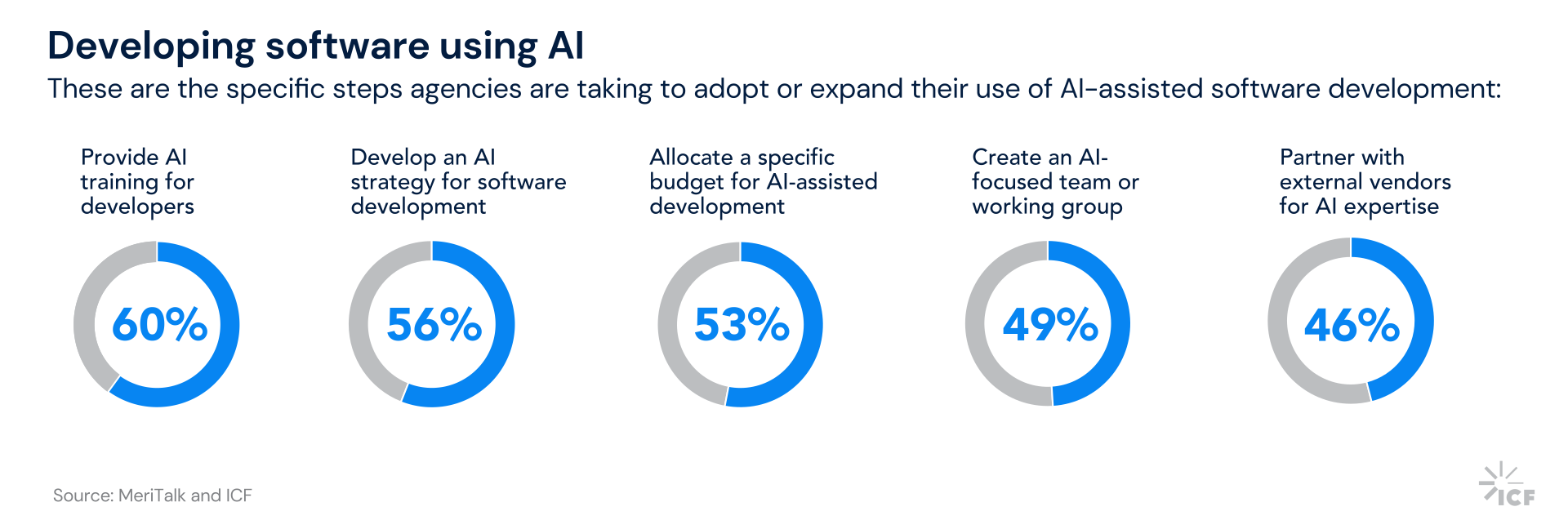

Federal agencies are increasingly applying artificial intelligence to improve how software is designed, tested, and delivered—particularly in environments where timelines, security, and reliability matter.
ICF survey findings show where AI is already influencing software development practices, where adoption remains uneven, and what this means for leaders responsible for delivery, risk, and performance.
The transformative impact of AI
To better understand how IT leaders are adopting AI in software development and the challenges they face, we partnered with MeriTalk to survey 100 federal IT decision-makers. The findings offer a clear look at AI’s role, potential, and roadblocks in advancing mission outcomes.
Our research highlights tangible progress in integrating AI into software development workflows, alongside persistent gaps in capability, governance, and adoption. For federal leaders, the data clarifies where AI can improve execution today—and where caution and discipline remain essential.
“To build momentum in modernization, agency IT leaders should prioritize immediate, practical action to start using AI—rather than getting stuck in prolonged planning or overcomplicated frameworks.”
— Kyle Tuberson, Chief Technology Officer, ICF
What can AI-assistance do for federal agencies?
AI is rapidly advancing technologies across the federal government, including software development. While only 46% of federal employees consider themselves core users of AI-assisted software development, all agencies are taking steps to expand their use of AI.
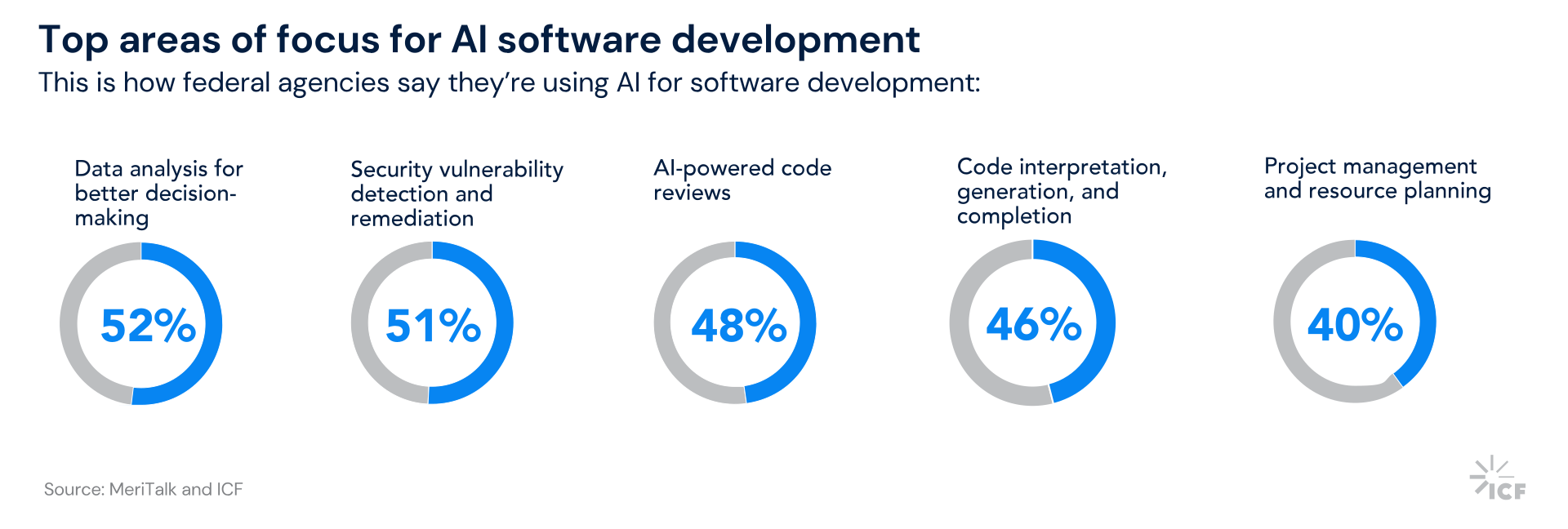
How agencies are leveraging AI largely depends on the user group. For example, core AI users—IT decision-makers who say they “almost always” use AI-assisted software development—point to data analysis as their top application, while less frequent users focus on detecting security vulnerabilities.
“It’s essential to leverage pre-built solutions as key enablers for rapid progress, helping to bypass initial bottlenecks and kickstart AI initiatives right from the start.”
— Ratima Kataria, Vice President, Strategy and Growth, Federal Health, ICF
Applying AI to accelerate federal software development
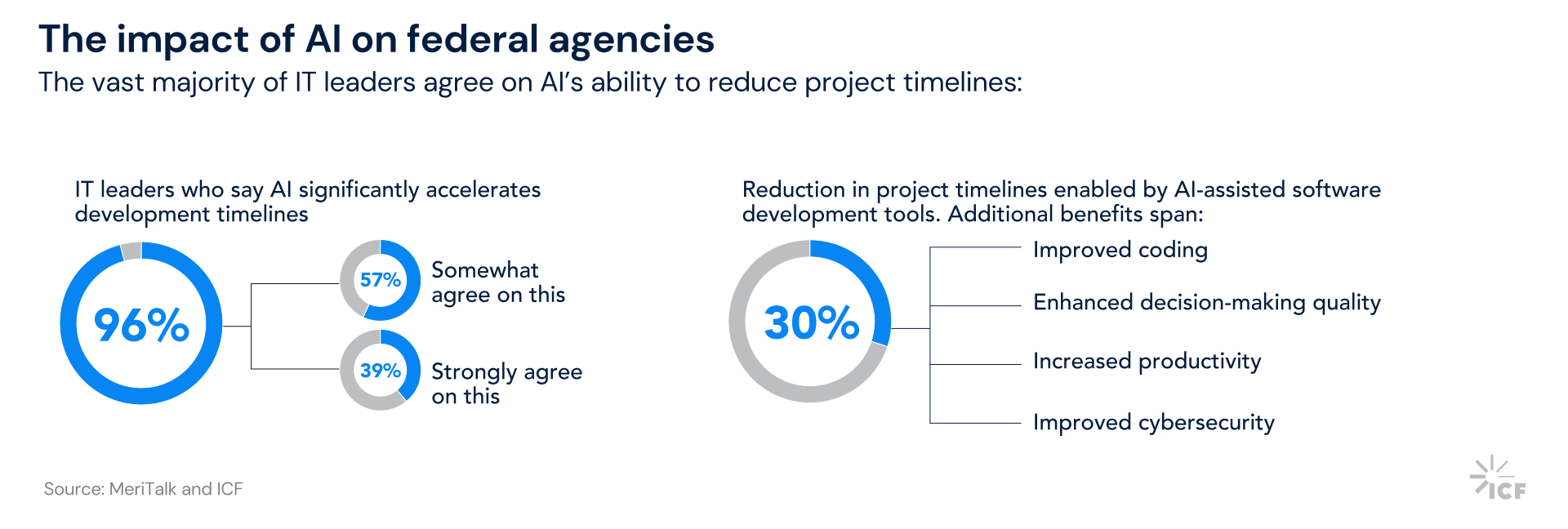
AI-assisted software development can deliver measurable improvements in performance and innovation for federal agencies. By adopting AI-powered tools to automate routine tasks, streamline testing, and support real-time decision making, agencies can accelerate delivery timelines and better align resources to mission outcomes.
Integrating AI into core development workflows—alongside targeted employee training—enables agencies to reduce manual errors and focus talent on higher-impact activities. Success depends on addressing AI adoption challenges while advancing incrementally and building on practical wins.
A turning point for federal software innovation
Many federal agencies are optimistic about AI-driven development as a catalyst for the next wave of government innovation. Realizing this potential will require leaders to translate optimism into disciplined action—embedding AI into software development in ways that deliver lasting value.